
Blog

What is Counselling and how does it work?

What Is Counselling?

When people first come to see me I often find that, although they believe they need to see a counsellor, they have no idea what counselling is or how it works. In this blog I would like to try to demystify counselling for you
 
So what is counselling? Well It’s definitely not tea and sympathy! Counselling is a process that empowers people and can set them free from problems that ruin their quality of life
 
Counselling Works::
 
*Through a working alliance between the client and the counsellor; meaning that they work together to solve problems
 
*Through the counsellor being empathic, non judgmental and real in the relationship and through understanding that counselling is a process, not a quick fix
 
*Through the counsellor providing a therapeutic environment where the client feels it’s safe to trust the counsellor
 
*Through a clear agreement between counsellor and client, of confidentiality and complete autonomy for the client. Autonomy means that the client has freedom of choice and the right to make his/her own decisions in the therapy sessions
 
*Through agreeing clear boundaries of day and time. Clients can rest assured that the counsellor will be available to give them their undivided attention, on the same day and at the same time, for an hour every week for as long as the counselling process continues
 
*Through the client feeling comfortable enough with the counsellor to be able to open up and talk without holding back. In other words talking therapy
 
*Through the counsellor having experience and good listening skills. Counselling can be a difficult experience initially as it can stir up painful feelings. However, it’s necessary to bring those feelings to the surface in order to process them and move on. This is one reason why trusting the counsellor is so important.
 
*Through the knowledge, experience and insight that enables the counsellor to identify approaches to therapy that are best suited to the individual client. An example may be Cognitive Behavioural Therapy (CBT) for someone who tends to think negatively. Another may be Transactional Analysis (TA) for someone who has experienced childhood trauma. An approach is often chosen by first trying to establish the root of the problem through talking therapy. Anxiety and depression, for example, don’t appear out of nowhere; they have a root cause.

There is a large variety of approaches to therapy and counsellors tend to work in a variety of ways, depending on their training and their development within the profession
 
*Through the counsellor having credible, recognised qualifications such as being registered with an organisation like the British Association for Counselling and Psychotherapy or the United Kingdom Register of Counsellors and Psychotherapists
 
*Through the therapist adhering to a professional ethical code and being accountable for their client work
 
How long does Counselling take?
 
It depends on the nature and depth of the problem. If you have limited resources to pay for therapy consider telling the counsellor you can only afford a specific number of sessions. You may be offered CBT, which can be very focused but may be less effective for complex problems without talking therapy. However, it may be of some help to start with and it may possible for you to return for more therapy later on
 
What Kind of People do Therapists See?
 
The answer is probably people like you. Anyone who wants to talk about their thoughts, feelings and behaviour and anyone who is experiencing emotional or mental health issues. In my own practice I see professionals, self-employed people and a variety of others, predominantly aged 18 – 70.
 
Self Help
 
Sometimes people tell me they’ve tried self help books or websites and they struggle to understand why counselling can help where self help has failed. Self help can be useful for many people where the issue is superficial and not too problematic but in more complex situations people usually need professional help. Also, sometimes people have blind spots in their feelings, thoughts and behaviour which a professional can help them to see
 
What kind of problems can a counsellor help people with?

There’s a very long list but Some of them are:
 
Anxiety, Depression, Abuse, Stress at work
Grief and Loss, Still birth and miscarriage
The anticipation of loss (such as when a loved one who is terminally ill)
Eating Disorders, Self harm, Suicidal thoughts
Obsessive Compulsive Disorders, Anger management problems
Assertiveness difficulties, Low self esteem, Bullying
Relationship problems, Family problems, Separation and Divorce
Post traumatic stress
 
This is not an exhaustive list, so if you have an issue that isn’t listed here, and wonder if a counsellor can help you, please get in touch and ask me. For details see the contact page.

9 Things People In Therapy Want You To Know

I came across this article in the Huffington Post which is absolutely spot on.  The full article can be read here: http://www.huffingtonpost.com/entry/what-to-know-about-therapy_us_56967f49e4b0ce496422c5f7?.

1. You should never feel ashamed for being in therapy.

Everyone experiences bouts of stress or sadness. But when these feelings become too overwhelming, therapy can help a person take back control. There is absolutely no shame in seeking help.

Talking about your issues and problems out loud can be very helpful. It gives some perspective,” Gregory Dalack, chair of the department of psychiatry at the University of Michigan, previously told HuffPost.

“Talking with somebody who is trained to understand anxiety and depression can be even more helpful to help manage those symptoms, reframe some of the negative thoughts we tend to have and move us to a place [mentally] where we can cope with those difficulties,” he explained.

Even the people who seemingly “have it all together” sometimes need a little assistance. Public figures from Kerry Washington and Howie Mandel to Kate Middleton and Demi Lovato have all praised the benefits of going to therapy.

2. There’s still a huge stigma attached to it.

Not only is there sometimes a negative perception when it comes to therapy, the stereotype prevents people from even trying it in the first place. Research shows many people with depression don’t actively seek treatment to help manage their condition.

Let’s reiterate the first point: There’s absolutely nothing wrong with asking for help.

3. When it comes to treatment, everybody’s different.

There’s no one-size-fits-all when it comes to treating matters of the mind. There are multiple methods of therapy, from cognitive behavioral therapy to group therapy. What works best for one person may be entirely different for someone else.

4. There is no “right” amount of time to be in therapy.

The length of time in therapy depends on circumstances like a person’s level of stress, life events or mental illness diagnosis.

“While some forms of therapy are open-ended, others can be more focused on helping you manage the issues at hand over a relatively short period of time,” Dalack said.

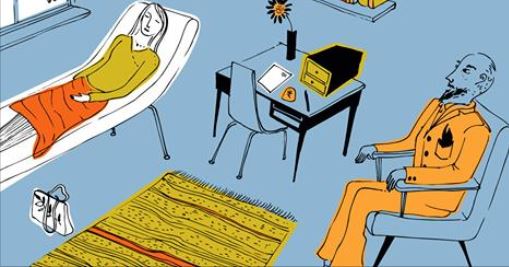
5. No, you don’t have to lay on a couch.

Many people have a preconceived idea about what a session is like based purely on pop culture, and that usually includes the idea that you absolutely must lay on a couch as a gray-haired man with glasses writes down your deepest secrets on a clipboard. More often than not, the portrayal is far from the truth.

6. It sometimes takes a while to find the right therapist.

It doesn’t mean anything if a person has seen multiple mental health professionals. To employ a cliché, therapy is a lot like dating — it isn’t necessarily a good match on the first try. The point is that a person is getting the help they need.

7. Not everyone in therapy has a mental health disorder.

Therapy can help people sort through any distressing issue, from work-related stress and family conflict to marriage troubles and academic pressures. There is no wrong reason for seeking a little support.

8. Your therapist definitely doesn’t gossip.

At least not in the way you may think they do. Therapy is all about someone’s personal development. That may include discussions about people who have shaped their current reality, but it’s not a water-cooler gossip session by any stretch of the imagination.

9. Being in therapy doesn’t necessarily lead to medication, but if it does, that’s totally okay.

Not all people in therapy are on medication; not all people in therapy can manage their condition just by seeing a professional.

Like most medical treatments, the method depends on the symptoms and the circumstances. A therapist will work with a person in order to develop the right plan, which may or may not include medication.

Taken from the Huffington Post.

Grief and Grieving

Grief and Grieving

People Grieve Differently
Grief is what we experience when we lose someone we’ve loved and the depth of our grief is a measure of our attachment and love. Grief is what we feel on the inside and we all grieve differently. It’s important to remember that what is seen on the outside is not necessarily a reflection of what is happening on the inside. We may think that someone has “got over” their grief because they aren’t tearful in public. However, that person may be very good at hiding their feelings. It’s not really helpful to think in terms of someone “getting over” losing a loved one. Many people never “get over” it but, eventually, they may succeed in making a different life without that person.

How Can We Support a Grieving Person?
There’s nothing we can say to help a grieving person feel better but what we can do is let them know how sorry we are that this has happened to them. The best way we can help is to let them know that we can’t understand how they must be feeling but that we are thinking about them, perhaps praying for them; that we are willing to be a listening ear and offer support and practical help. There is a lot to do when someone dies, especially admin work and some moral support may well be appreciated and advice if requested. They may appreciate help with other practical matters such as shopping, cooking, gardening, housework etc. if it can be done in a low key way without intruding on their grief.

What Should We Not Do and Say?
When someone we know has lost a loved one we often don’t know what to say; we feel uncomfortable and we may even feel tempted to avoid them. Avoidance can lead to the grieving person feeling isolated and lonely. If the grieving person is someone close to you a much needed hug may be appreciated.
We can avoid unhelpful remarks such as “I know how you feel” and “time is a great healer”. Time may be a factor in healing grief but it’s not a helpful remark for the bereaved person at that moment. Also, please remember that grief often lasts for years so please don’t speak in terms of someone “moving on”; this can be extremely distressing. It takes as long as it takes and there is no way of measuring it.

The Funeral
Funerals are an important and helpful way of saying goodbye. In Britain we tend to try and avoid showing our emotions and we worry about crying in case we cause additional distress to the family. However, the family is already distressed so it’s not likely to make any difference. Crying is a good thing because bottling up our sadness is bad for our mental health. Families and friends usually appreciate people turning up to pay their respects and see it as a measure of how loved the person they’ve lost is. We just need to be sensitive towards the bereaved.

The Grieving Process
The grieving process can be vary in length; for some it may be a few months and for others it may take many years. There are said to be five stages of grief; Shock, anger, sadness, guilt and acceptance. Though we may not experience all of them and we may not experience them in any particular order. Every grieving person is different; sometimes shock comes in the form of denial, sometimes sadness comes in the form of depression and sometimes guilt comes in the form of bargaining. We will always miss the person we’ve lost; there will always be a hole in our lives that no one else can fill. However, the acute pain does gradually diminish and, although we don’t want to, we do eventually adapt to a different life without the person we love.

Complicated Grief
We may experience grief or loss at many times in our lives and there is no way to quantify it; a significant loss, such as separation or divorce, may be more painful to someone than a death. Sometimes grief is complicated such as when a child or young person dies, when someone commits suicide or when combined with Post Traumatic Stress Disorder; this may require specialist help such as professional counselling. Sometimes people feel stuck in grief and again may need professional help to be able to move forward.

The Physical Distress of Grief
Most people don’t realize that with grieving not only do we experience emotional pain, the desperation and yearning for our loved one to come back to us, but we also experience physical pain. As with the grieving process we are unique individuals and we have different experiences; there may be a variety of physical symptoms including fatigue, joint and muscle pain, nausea, indigestion and headaches. Some people have nightmares or vivid dreams in which their loved one returns; then they wake to the harsh reality that they’ve gone. People often imagine that they see their loved one when they are out and about, only to have their hopes dashed when they realize it’s someone else. Although these things can be distressing they are a normal part of grieving and will fade away in time.

Help is Available
Help is available for those who want it; some people will and others won’t. It’s up to the grieving person to decide. The most important thing to do when someone we love dies is to talk about it and not to bottle up our grief. Sometimes we worry that people may get fed up with listening to us; we worry that they may get bored of listening but we still feel the need to talk. There are some very good bereavement groups and organisations whose role is to listen and be supportive. Probably the best known national bereavement care organization is Cruse Bereavement Care.

cruse.org.uk
0844 477 9400
There are other bereavement organisations too; some local and some national ones. Your local doctor’s surgery will probably have details

My Partner Overworks

My partner overworks. She’s happy doing what she does and she’s so fulfilled but it’s all she talks about outside of the kids. I’m happy in my job too but hers is her dream job and I don’t want her to feel I’m not supporting her but even when I try to talk to her about it she tells me it’s just for now… that while the business is there we have to make the most of it. I’m not a selfish person but it’s like having a third person in the marriage sometimes
Anonymous

Answer
This must be incredibly frustrating for you as your partner’s life seems to be way out of balance. It seems like there’s no time left for you. However, she may be anxious about the responsibility of her job. When people have already tried talking, sometimes it helps to talk again taking a different approach. Being supportive is important in any partnership but there’s a limit, which is where negotiating boundaries can become helpful. Calm, clear communication is often the key for couples.It may be possible to agree on times when it’s ok to work or talk about work, remembering to be reassuring and supportive. It may be possible to agree that there are times when we don’t talk about work; when the focus is on other things. Possibilities may be meal times, weekends and after a certain time in the evening. It’s all about calm, clear communication with balance and agreement; in a caring way

My Mum Won’t Come To My Wedding

Next month I’m getting married to the man of my dreams and until last week I couldn’t wait. I felt so excited but then my Mum dropped a bombshell. She said she won’t come to the wedding if my Dad and stepmother are coming. She says I have to choose between her or my Dad. She’s angry and bitter and now I feel like she’s ruining my wedding, which should be the best day of my life.
Anonymous

Answer
Anger and bitterness can be incredibly destructive. If we allow ourselves to dwell on negative thoughts and beliefs they can cloud our judgment and adversely change our behaviour. They can also ruin our relationships.
When faced with manipulative behaviour we can try talking and sometimes this will help. If talking is unsuccessful though the only thing we can do is to process our feelings and move forward. Confiding in someone we trust is a good place to start; bottling up our feelings is never good. Then we can try to move forward, acknowledging that we feel hurt and sad but refusing to allow ourselves to dwell on the situation. Instead we can think about all the loving, supportive family and friends in our lives and be thankful. We can be mindful of all the good things we have in the present time and to look forward to in the future. To a certain extent make our own happiness.

1 2 3 9